Helping Enterprises Scale Their Jenkins Software Practices and Tools

summary
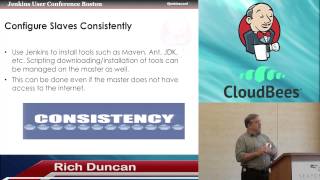
Enterprise Jenkins deployments scale to dozens of teams, hundreds of applications and thousands of builds per month and require staging servers, vetted plugins and clear policies. Limit experimentation to nonproduction, test updates on a staging instance, and avoid running builds on the master; provision slaves consistently with Puppet/Chef or Jenkins tool provisioning. Use git feature branches (delete after merge), publish artifacts to Artifactory/Nexus, enforce access via AD/LDAP and the credentials plugin, and control job changes with job config plugin and promoted builds; pilot with 2–3 teams and secure executive sponsorship.
AI-written summary · about
chapters (8)
- 0:00Start
- 1:22Context
- 5:27Common Concerns
- 8:32Plugins - Good, Bad and Useful
- 17:27Jenkins and Continuous Delivery
- 24:27Enterprise Security
- 26:43Example Security Segments
- 29:26Changing and Enterprise
related talks
 34mHelping Enterprises Scale Their Jenkins Software Practices and Tools
 37mHelping Enterprises Scale Their Jenkins Software Practices and Tools
 33mMaking Strides towards Enterprise-Scale DevOps...w/ Jenkins in Your Tool Chain
 28mGrowing Pains - Scaling Jenkins in the Federal Sector
 30mA Journey Introducing Jenkins to Enterprise IT
 47mJenkins in the Enterprise: Building Resilient CI Infrastructure
 27mWhy we provisioned 37 Jenkins servers...
 42mSeven Habits of Highly Effective Jenkins Users