Helping Enterprises Scale Their Jenkins Software Practices and Tools
summary
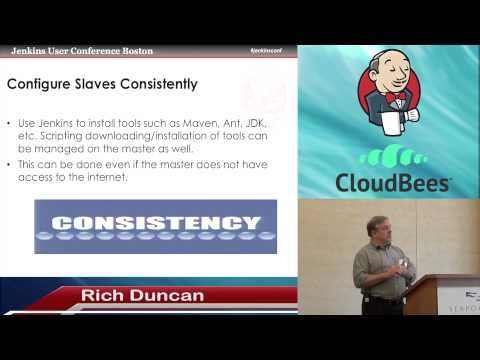
Jenkins at enterprise scale manages dozens of teams, hundreds of apps and thousands of builds per month, so prioritize policies over plugins: use LTS releases, a vetted plugin whitelist, and a release cadence; enforce standardized slaves and never run heavy builds on the master; classify jobs (fast CI on commit, nightly/regression with code-quality, full release builds) and automate job creation via Job DSL/job templating; deploy audit and access controls with folders plus for per-team isolation and use Groovy, promoted-builds and audit-trail plugins for scripting, promotion and traceability.
AI-written summary · about
chapters (16)
- 0:00Introduction
- 2:56Concerns
- 5:51Plugin Ecosystem
- 10:00Job Integration
- 10:56Audit Trail
- 12:49Groovy Pilot
- 14:14Additional Build Steps
- 14:39Inject
- 15:09Plugins
- 16:07Best Practices
- 16:21Scanning Slaves
- 17:20Letting Jenkins Drop
- 18:22Running Jobs on Slaves
- 21:23Job Goals
- 26:20Integration
- 27:39Open Source Jenkins
related talks
 37mHelping Enterprises Scale Their Jenkins Software Practices and Tools
- 37mHelping Enterprises Scale Their Jenkins Software Practices and Tools
 42mSeven Habits of Highly Effective Jenkins Users
 30mA Journey Introducing Jenkins to Enterprise IT
- 30mA Journey Introducing Jenkins to Enterprise IT
 33mMaking Strides towards Enterprise-Scale DevOps...w/ Jenkins in Your Tool Chain
- 42mSeven Habits of Highly Effective Jenkins Users
 28mGrowing Pains - Scaling Jenkins in the Federal Sector