Stairway to Heaven: 10 Best Practices for Enterprise Cont. Delivery w/ Jenkins

summary
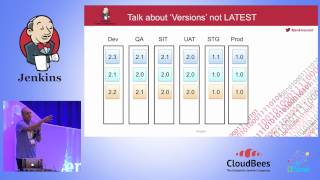
Ten concrete practices for enterprise continuous delivery using Jenkins and related tools, with examples and results: use build once deploy anywhere packages versioned in a repository; prefer Jenkins workflow and the parameterized matrix for parallel tests and a touchstone build; run dry run resource checks before deployments; automate approvals with audit trails; manage DB changes with migration tools (rollbacks are often impossible); real case cuts a six‑day deployment to six hours.
AI-written summary · about
chapters (15)
- 0:00Enterprise CD with Jenkins
- 1:43Continuous delivery in practice
- 5:45Why CD transforms enterprises
- 7:11Choosing what to automate first
- 9:18Push versus pull deployment models
- 11:47Deployment type and packaging
- 15:49Testing and dry runs before deploy
- 17:11Automated testing frameworks
- 21:25Approval and compliance in regulated envs
- 25:38Rollback strategies for DB and middleware
- 29:39Measuring CD success
- 33:12Recap of 10 best practices
- 33:35Simple WebSphere deploy
- 37:26Complex WebSphere cluster deploy
- 41:23Key takeaways and recommendations
related talks
 44mStairway to Heaven: 10 Best Practices for Enterprise Cont. Delivery w/ Jenkins
 45mBuilding Your Continuous Delivery Toolkit
 37mHelping Enterprises Scale Their Jenkins Software Practices and Tools
 24mWhy, What, and How of Continuous Delivery
 42mBuilding Your Continuous Delivery Toolkit
- 45mBuilding Your Continuous Delivery Toolkit
- 37mHelping Enterprises Scale Their Jenkins Software Practices and Tools
 33mMaking Strides towards Enterprise-Scale DevOps...w/ Jenkins in Your Tool Chain