Managing in Complexity (and chaos)

summary
Argues organizations must be engineered for unknown unknowns using the EU Field Guide and an open-source cynefin.io toolkit; claims human sensor networks + patented high‑obstacle metadata let the workforce map dispositions in real time (a map shows 3–4 distinct opinion clusters and helps find the 17%). Recommends practical methods: entangled trios, distributed decision-making with a 12‑hour auto‑authority window, estuarine mapping for energy gradients; reports pilots in pharma and enterprise that deliver usable weak‑signal detection and faster, lower‑risk decisions.
AI-written summary · about
chapters (17)
- 0:00Introduction
- 1:25Data-driven approach
- 3:11Software industry critique
- 5:35Human systems design
- 7:28Sense making basics
- 10:19Decision heuristics
- 13:32Narrative in organizations
- 16:14Complexity science
- 21:07Logic and innovation
- 23:21Exaptation principles
- 26:09Cognitive neuroscience
- 30:31Leadership and crisis
- 34:55Distributed decision making
- 39:27Informal networks
- 41:10Mapping constraints
- 42:51Human sensor networks
- 47:03Conclusion and Q&A
related talks
 36mLeadership During Chaos
 55mLeadership: Things you would never think about
 33mHuman System Design Testing
 01h 00mTackling Socio-technical Complexity in the Heart of Your Team
 40mPersonnel Chaos Engineering and Building a Resilient Organizational Structure
 40mCynefin and Sense-Making in the Digital World
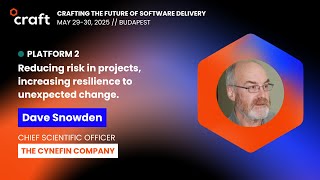 45mReducing risk in projects, increasing resilience to unexpected change
 42mIt's simply not that simple - navigating complexity with curiosity and connectio...