D2T1 - Backdooring & Remotely Controlling Cars
summary
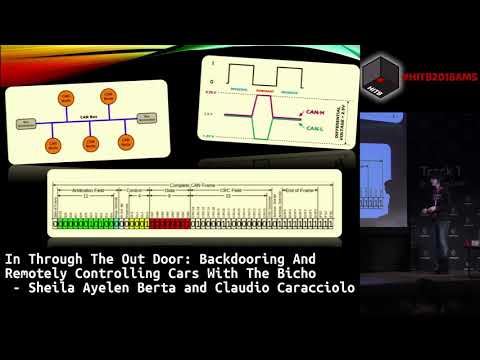
A hardware CAN backdoor called The Bicho (evolved from early DeVito prototypes) injects higher-priority CAN frames fast enough to override legitimate messages and can remotely disable ECUs so a car won’t start for days. It uses a PIC microcontroller, GSM module for SMS-triggered payloads, a USB programming switch and a GUI “Car Backdoor Maker”, ships with open-source tools and a shared frame database, and the latest firmware totals about 2,150 lines of code.
AI-written summary · about
chapters (15)
- 0:00Intro
- 1:25Background
- 2:12Research
- 3:00Connected Cars
- 4:00Broken Cars
- 5:58Safety
- 9:02CAN Protocol
- 12:47Finding the car frame
- 13:29Reverse process
- 17:58First version
- 19:59Second version
- 21:12Wireless way
- 22:42Configuration
- 26:34Open Candy
- 34:02Questions
related talks
 24mThe Bicho: backdooring CAN bus for remote car hacking
 37mAutomatic Automotive Hacking
 50mAdvanced CAN Injection Techniques for Vehicle Networks
 39mBackdooring Hardware Devices by Injecting Malicious Payloads on Microcontrollers
 43mSecuring the Connected Car
 51mSteering Clear of Danger: Decrypting the Realities of Remote Car Hacking
 44mMy Car, My Keys: Obtaining CAN Bus SecOC Signing Keys
 36mCar Hacking