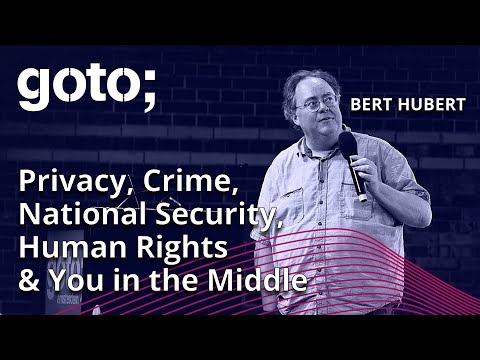
Privacy, Crime, National Security, Human Rights & You in the Middle
summary
Claims that large telemetry flows enable surveillance and prosecution, backed by concrete examples: data brokers sell lists (pregnancy, abortion), Angry Birds sent device emails in plaintext enabling mass tracking, car telemetry reveals odometer rollback and drunk driving patterns, Firefox used telemetry to trace a crash to 2,000 cookies, and strong end-to-end encryption can block lawful investigative access as happened with a phone-vs-FBI dynamic. Default choices and frameworks log everything so not having data means you can't hand it over.
AI-written summary · about
chapters (9)
- 0:00Introduction and background
- 4:10The state of data leakage
- 6:58Ethics and responsibility
- 10:53Modern data collection risks
- 13:31Interacting with authorities
- 17:56Telemetry and surveillance
- 25:04The developer's role
- 31:10Laws and balancing acts
- 36:08Final thoughts and advice
related talks
 01h 03mPanel: The security paradox. Individual privacy vs digital driftnets
 01h 02mWeaponizing Technology: Examining the Importance of Privacy...
 51mPrivacy, a relic of the past?
 01h 15mSurveillance And Criminal Law.
 23mCan you keep a secret? or Privacy in the Digital Age
 03mHighlights - Secure Your Data
 17mPrivacy Design Flaws
 20mPrivacy Paradigms for Law Enforcement Response