Connecting the Internet of Things
summary
Claims Erlang is ideal for IoT because fine‑grained processes, supervisors and hot code upgrades let a platform scale and tolerate failure while routing massive device traffic. Demonstrated work: a cloud platform that will cloud connect 15,000 trucks and proxy legacy UDP GPS units into first‑class agents, and a quick GPS codec implemented in 150 lines of Erlang. Covers protocols (Bluetooth LE, DDS, MQTT, AMQP, Protocol Buffers), hard limits like 1 MB/month device plans, identity, discovery, security and analytics needs for billions of devices.
AI-written summary · about
chapters (14)
- 0:00Introduction to the Internet of Things
- 1:48IoT concept defined
- 5:04IoT history
- 10:07Smart home devices
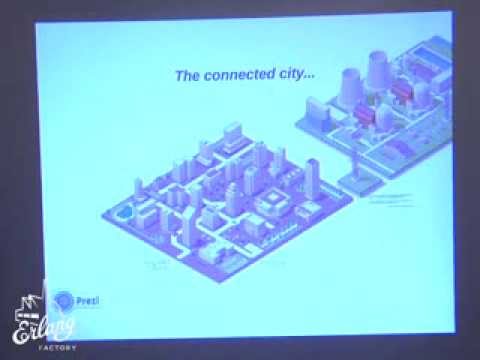
- 13:17Smart cities
- 17:30Connected industry and asset tracking
- 21:48IoT platform challenges
- 26:23IoT identity and security
- 30:13Wearable sensors
- 34:49IoT data analysis
- 35:51Erlang for IoT
- 42:18Erlang codecs
- 43:41IoT challenges summary
- 44:12Q&A
related talks
 45mElixir and the Internet of Things
 01h 03mThinking Erlang in a connected world
 49mAn Introduction to Erlang From behind the Trenches
 39mThe Internet of Things in Practice
 17mKeynote: Inter-dependence of IOT & Network
 20mBuilding an IoT Demand Response solution with Elixir
 27mIoT Edge Computing with bare-metal Erlang
 41mKeynote Panel discussion: Erlang all the things