Pros and cons of using Kubernetes as a development platform
summary
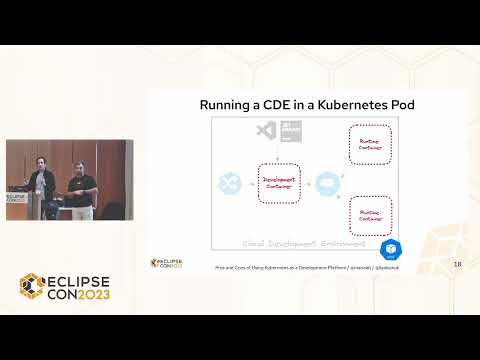
Eclipse Che moves dev workspaces from VMs to containers and then to Kubernetes, builds a DevWorkspace operator to make workspaces first‑class Kubernetes objects, and reports it mostly works but requires many hacks: solving unprivileged container failures, OOM kills and CPU throttling, immutable images that block ad‑hoc installs, Docker‑in‑Docker limits, long image pulls, and slow PV mounts. Storage needs grow — from 600 GB to over 1 TB in dogfooding — so fixes include block storage, per‑user PVs, ephemeral workspaces and readiness checks; true parity waits on user namespaces and /proc mount features.
AI-written summary · about
chapters (9)
- 0:00Introduction and vision
- 1:36Choosing Kubernetes
- 5:43Pros of using Kubernetes
- 8:37Architecture and challenges
- 11:52Container and resource issues
- 20:33Persistent storage challenges
- 24:13Networking and proxy issues
- 30:27Future opportunities
- 33:48Q&A and closing
related talks
 35mBenefits of Eclipse Che When Developing Microservices Apps
 28mDeploying Che on OpenShift
 28mRun your favorite IDE on Kubernetes
 47mEclipse Che and Development of Microservices Apps
 27mMaximizing Developer Productivity in Kubernetes
 24mEclipse Che & the future of Cloud Development Tool
 34mScaling Cloud Development Environments on K8s: Enterprise-Scale Adoption Lessons
 32mDeveloping on Containers with Dev Containers