How AI Is Transforming Medical Imaging
summary
Shows concrete results: UNet and GANs reduce noise and segment calcifications so that an original mammogram reviewed as cancer by 7 of 14 radiologists becomes flagged by all 14 with AI assistance. Describes physics-informed neural nets that combine material maps and SPR estimation for proton therapy planning, claiming up to 40% more patients approved, 10% better NTCP and ~30% lower administrative and per‑patient costs versus current CT‑based workflows.
AI-written summary · about
chapters (15)
- 0:00AI in medical imaging
- 1:24AI in healthcare evolution
- 3:16AI for cancer detection
- 4:43Patient comfort with AI
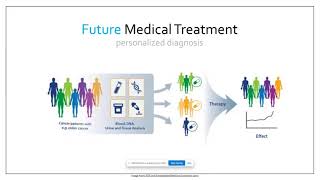
- 5:47Precision medicine & diagnostics
- 7:16Image quality importance
- 8:20GANs & U-Net architectures
- 9:25U-Net for segmentation
- 11:54How GANs work
- 13:23Physics-informed AI models
- 15:15Proton therapy & ratios
- 17:24AI reducing proton therapy costs
- 19:15AI material maps for treatment
- 20:41AI in medical imaging future
- 21:47Q&A