CD for DBs: Database Deployment Strategies
summary
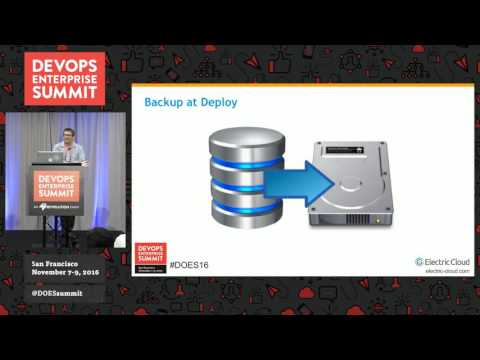
Maps practical deployment patterns to tradeoffs: compares SQL scripts (fast but error‑prone) with backup‑at‑deploy (safe but downtime and slow for TBs) and Microsoft DACPAC (easy rollback in many cases, MS‑only). Describes cluster‑based options — rolling deployments and partial/canary clusters — and tool integration (ElectricFlow supports automated rollbacks and rolling deploys). Emphasizes test backups, cloning lower environments, versioning DB metadata, and concrete failure scenarios developers and release engineers face.
AI-written summary · about
chapters (16)
- 0:00Intro
- 0:13Evolution of Database Deployments
- 4:36Distributed Development / Infrastructure
- 5:17SQL Scripts / Rollback Scripts - Advantages
- 5:40SQL Scripts / Rollback Scripts - Disadvantages
- 6:13SQL Scripts / Rollback Scripts - Who should use
- 7:20Backup at Deploy - Disadvantages
- 7:47Backup at Deploy - Who should use
- 10:21Other DB Deployment tools
- 12:06Partial deploy (Canary)
- 13:42Partial Deploy - Advantages
- 14:20Partial Deploy - Disadvantages
- 16:01Rolling deployment - Advantages
- 16:36Rolling Deployment - Disadvantages
- 17:37Things to remember
- 19:23Talk to me
related talks
 01h 00mContinuous Integration and Delivery for Databases
 50mBringing DevOps to the Database
 01h 00mLet's Get Scary and Continuously Deploy Database Changes!
 31mDevOps Practices for the Database Team
 48mDatabase Deployment Cowboys to Continuous Delivery Heroes
 38mGetting Along With Your Db Ops Team
 45mEnabling Continuous Delivery with Database Practices
 27mDevOps and the Database Bottleneck