Pseudo HDR - Enabling HDR Experience For SDR Video Streaming to Ordinary Devices

summary
Claims a preprocess that applies CL-AHE in YUV with region-based weighting and skin detection, adds temporal smoothing and debanding, and runs real-time as single-thread 1080p. It prevents noise amplification with contrast limits, exposes more texture so bitrate rises but reports >10% bitrate savings for equal quality after codec+AI optimizations, and notes remaining risks: flicker, amplified compression artifacts, and the lack of robust objective quality metrics.
AI-written summary · about
chapters (9)
- 0:00Intro
- 0:31Video Compression with Intelligent Optimization
- 1:14Pseudo HDR Conversion
- 2:24Adaptive Histogram Equalization (AHE)
- 3:09Contrast Limit AHE (CL-AGE)
- 3:52Histogram Transformation. From RGB to YUV
- 4:55Pseudo HDR: Region Based Adaptive Approach
- 6:40Pseudo-HDR Example
- 10:46Pseudo-HDR+ Preprocessing Example
related talks
 20mUnderstanding HDR
 26mDelivering HDR
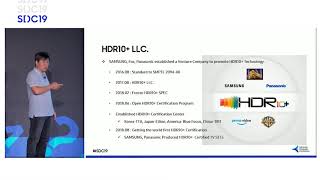 47mHDR10+ Contents Generation Tools and Workflow
 18mImproving your social experience quality with Android Camera
 23mLessons learned from streaming the World Cup in UHD with HDR
 41mHandling HDR Media on Android Without Breaking It
 13mPractical HDR: Not 101, but Flavors, Pros, Cons, Dos and Don’ts
 12mApproach to HDR and Tonemap on Android