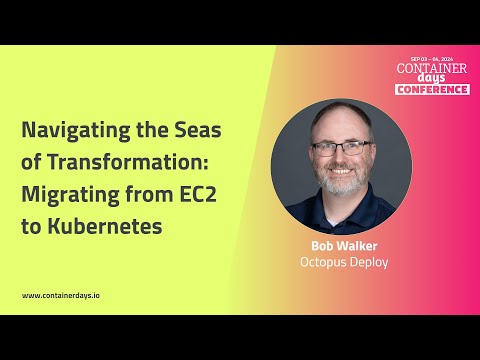
Navigating the Seas of Transformation: Migrating from EC2 to Kubernetes
summary
Migrates a SaaS from 1800 EC2 instances into Kubernetes over a nine‑month 2019 effort, converting to Linux containers, porting to .NET Core (about 10–15% code touched), and ending with ~1,000 customer instances across eight clusters in three regions (nodes ~20 vCPU / 160 GB, 3–6 nodes). Uses per‑customer Azure SQL databases and Azure file shares, short‑lived Windows dynamic workers for Powershell, and a custom cloud portal for automation; it works but surfaces surprising post‑migration issues and requires a dedicated cloud platform team.
AI-written summary · about
chapters (11)
- 0:00Introduction and background
- 3:55Cost challenges with EC2
- 6:00Considering Kubernetes options
- 9:08Migrating to Linux containers
- 14:24Building the plane while flying
- 16:12Managed services vs self-hosting
- 19:04Octopus Cloud V2 architecture
- 20:35Managing clusters at scale
- 27:38Tooling for operational efficiency
- 29:02Key lessons learned
- 30:49Q&A session
related talks
 29mFrom EC2 to Kubernetes Takeaways from a Brownfield Migration
 20mKeynote: The Challenges of Migrating 150+ Microservices to Kubernetes
 39mLessons Learned Migrating an Existing Product to a Multi Tenant Cloud Native Environment
 46mMigrating from VMs to K8s
 23mMigration of a containerized legacy application to the cloud
 49mHardware to AWS, EC2 to EKS: Two Years, Two Epic Migrations
 59mMigrate and Modernize with Kubernetes and Windows Containers
 16mModernizing a legacy app using Windows Containers and Kubernetes: Challenges and Lessons learned