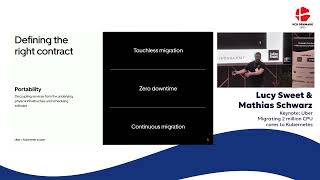
Migrating 2 million CPU cores to Kubernetes

summary
Uber migrates its stateless compute fleet from Peloton to Kubernetes, moving over 2 million CPU cores by running Peloton and K8s backends side by side and rolling services across clusters with tiered rollouts with automated gates and make‑before‑break steps. Built pieces include a K8s backend and overloaded CRD, an in‑pod container snapshot sidecar that uploads filesystems, an in‑memory cache fed by cluster informers for global reads, and automated diff/rollback logic under the umbrella of service portability. The migration completes with no app downtime.
AI-written summary · about
chapters (10)
- 0:00Introduction and background
- 3:35Why migrate from Peloton
- 8:12Migration challenges and risks
- 12:07Gradual rollout with tiering
- 14:56Container snapshotting solution
- 16:42Caching Kubernetes API requests
- 18:51Live migration demo
- 21:41Lessons learned from migration
- 24:50Current status and future plans
- 26:13Q&A session
related talks
 24mMigrating 2 million CPU cores to Kubernetes
 36mOnly Slightly Bent: Uber’s Kubernetes Migration Journey for Microservices
 27mPods on Steroids - A Case Study of Migrating Flipkart.com to K8s on Bare Metal
 33mKubernetizing Big Data and ML Workloads at Uber
 20mKeynote: The Challenges of Migrating 150+ Microservices to Kubernetes
 35mPerforming Infrastructure Migrations at Scale
 35mThe Oregon Trail to Kubernetes [I]
 36mFrom Screen to Pods: Bootstrapping a Cloud Agnostic System using Kubernetes [I]