Securing DNSSEC with Ritual and Ceremony
summary
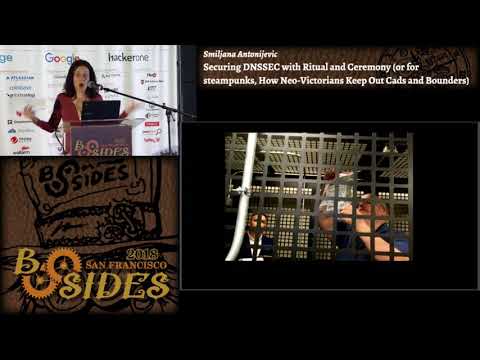
Anthropological study of Packet Clearing House and ICANN ceremonies shows concrete practices that produce trust: layered physical security (facility, safe room, safes), tamper-evident bags holding smart cards and laptops, and HSMs configured as HSM with no hard disk. Each step is read aloud (serial numbers, bag IDs), multi-camera live streams record everything, and roles are split—crypto officers vs security controllers—so no one person controls keys; ritualized scripts enforce correctness and community verification.
AI-written summary · about
chapters (10)
- 0:00Start
- 1:11Case studies
- 5:08The place
- 6:55Layers of (physical) security
- 7:07The artifacts
- 8:05Trusted roles and representatives
- 9:59Crypto Officers
- 11:19The participants
- 11:41The values
- 14:21The scripture
related talks
 43mSigning the Internet root zone
 46mDNSSEC
 58mFramework for Snarky Ceremonies
 59mWaking Up The Guards: Renewed Vigilance Is Needed To Regain Trust
 27mA Longitudinal, End-to-End View of the DNSSEC Ecosystem
 55mFlipping Bits: Your Credentials Are Certainly Mine
 41mWhen Cybersecurity Is More Than Just Vulnerabilities
 36mThe Art & Craft of Secrets: Using the Cryptographic Toolbox