Rapid-Fire Stories of Creative Solutions to InfoSec Problems

summary
Team replaced reactive chaos with documented triage workflows and an in-house security awareness video, built an open-source phone checklist for activists, deployed a sentiment-analysis pipeline (code on GitHub) to filter noisy OSINT, and hardened hypervisor access with staged, just-in-time provisioning steps. Metrics like on-time remediation rate and time-boxed hackathon/20% projects drive attention. Several prototypes become production web apps for incident triage and responsible-disclosure coordination at scale.
AI-written summary · about
chapters (4)
- 0:00Start
- 17:11Leadership Trait Analysis
- 23:00ENVIRONMENTAL FACTOR: Resources
- 30:26ENVIRONMENTAL FACTORS
related talks
 37mSecurity Culture Hacking: Disrupting the Security Status Quo
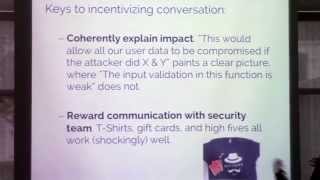 57mBuilding a Modern Security Engineering Organization
 21mhow to reconcile high-performance hosting and innovation projects with IT security
 49mLessons from DevSecOps Trenches
 58mThe Tactical Application Security Program: Getting Stuff Done
 33mLearning from Past Security Breaches: Strengthening AppSec Efforts and Focus
 24mConcrete Steps to Create a Security Culture
 31mSharing Security Secrets: How to Encourage Security Advocates