Yocto in the Real World – Philips Case Study
summary
Philips builds the Saeco Xelsis UI on Yocto to ship a connected Linux coffee machine in under two years, running a Qt app on NXP i.MX hardware, using Yocto SDKs so app devs build and deploy straight from Qt Creator. Security uses secure boot with secure air-gapped signing, CycloneDX SBOMs and CI-driven CVE triage (reports produce thousands of entries to risk-assess). Platformization reuses common Yocto layers, builds reproducibly with archived sources, and uses automated tests and hardware-in-loop plus SDK-driven Qt dev workflow for updates.
AI-written summary · about
chapters (9)
- 0:00Introduction and agenda
- 1:54Security challenges in embedded systems
- 3:39Philips Seiko coffee machine case
- 6:06Why Yocto for this project
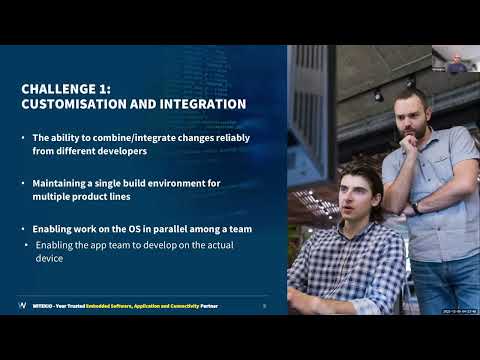
- 8:14Customization and integration with Yocto
- 13:56Security implementation in Yocto
- 19:58Long-term support and maintenance
- 26:30OTA updates and partition setup
- 29:43Q&A and closing remarks