Why do we need Clang/LLVM
summary
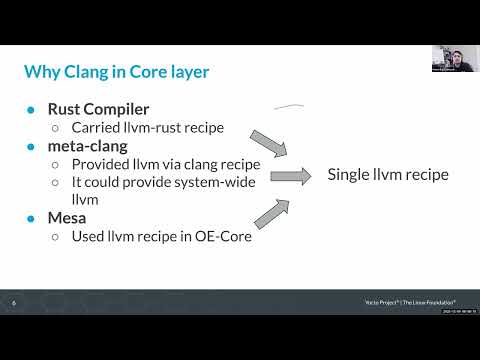
Clang/LLVM moves into OE-core because Mesa’s libclc and Chromium force LLVM components in, so Yocto now shares a single shared LLVM recipe instead of rebuilding LLVM per Rust/Mesa/clang, reducing duplicate builds but increasing CI compile cost — observed build time jumps 40→58 minutes after enabling libclc and clang. LLD gives large-link speedups for Chromium/WebKit, kernel already builds with clang, glibc is not yet clang-able, and thin LTO, LLD and cross-native wrapper usage are available and usable today.
AI-written summary · about
chapters (14)
- 0:00Introduction and overview
- 1:09Clang and LLVM basics
- 4:44Clang in OpenEmbedded and Yocto
- 8:18Why bring Clang into core
- 11:32Using Clang in Yocto Project
- 15:49Supported targets and GPU backends
- 17:15Current limitations and workarounds
- 19:21Future of meta-clang layer
- 20:46Clang cross-compilation benefits
- 21:51LLD linker performance gains
- 22:35Major projects using Clang
- 24:21Architectures and testing status
- 25:05Future improvements and upstreaming
- 26:31Q&A and closing remarks