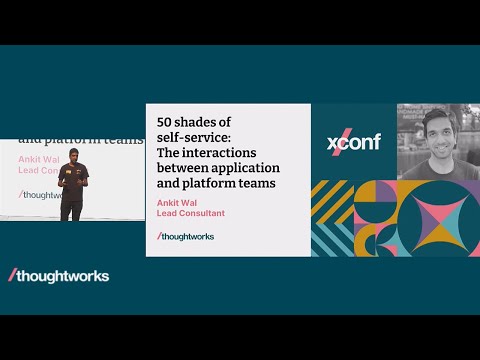
50 shades of self-service: The interactions between application and platform teams
summary
Argues that platform–application friction is a design problem and offers a simple framework: interactions must deliver autonomy and product thinking. Shows a concrete evolution of an NGINX reverse proxy platform: ticket-driven handoffs → structured Google Forms → YAML config generator with templating and CICD, which removes the human bottleneck, decouples teams and raises throughput. Recommends scoping features by user needs (example: accept or reject caching), adding sensible defaults, and measuring whether the third or fourth team can onboard without help.
AI-written summary · about
chapters (8)
- 0:00Start
- 2:13Platform Teams
- 4:02Why Do Platform Teams Exist
- 5:19Where Does It Start To Go Wrong
- 17:18Recap
- 18:33Product Thinking
- 21:41Quadrant Three Which Is High Autonomy but Low Product Thinking
- 26:23Conclusion
related talks
 39mPlatform Engineering as a (Community) Service
 29mThe Platform Engineering Revolution Panel: Empowering Developers Through Self-Service
 41mPlatform Engineering for Developers, Architects & the Rest of Us
 40mSelf-service for delivery value with platform engineering
 33mPlatform engineering: Build your own PaaS
 45mPlatform Engineering: A Deep Dive Conversation
 25mPlatform Engineering: Evolution or a Fancy Rename?
 08mInterview of Horacio Gonzalez