The journey to building effective engineering teams

summary
Estimate that 30–40% of engineering work is waste and that cutting just 20% of that (for 200 people) buys ~10 FTEs worth of annual capacity; start by doing value stream mapping to locate bottlenecks and approvals, then reorganize around flows with 4–8 person teams, reduce coupling (temporal, architectural, backlog), invest in platform/product thinking and technical health, track flow metrics like story flow efficiency, pull request merge time and DORA metrics, and avoid individual productivity metrics such as keystrokes or LOC.
AI-written summary · about
chapters (23)
- 0:00Introduction
- 2:20Engineering Effectiveness
- 9:44Individual Engineers
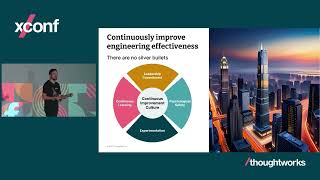
- 11:50Continuous Improvement
- 18:13Sensible Default Practices
- 22:36Types of Waste
- 24:03Optimization
- 26:04Where do you start
- 28:37Capability mapping
- 29:27How to measure effectiveness
- 30:29Leading indicators
- 31:13lagging indicators
- 32:08summary
- 32:53where to start
- 33:29team leads
- 34:07questions
- 35:42blame game
- 36:34individual productivity
- 38:11hypernoise
- 41:38hero mentality
- 42:55literature recommendations
- 43:20tdd
- 44:22Balancing engineering and delivery
related talks
 31mImproving engineering effectiveness: A journey for the entire organization
 31mEngineering Effectiveness: Achieving your goals with less
 44mEnhancing the Performance of Engineering Teams
 27mScaling Engineering & Product Teams
 06mRemoving engineering friction: Creating an evolutionary culture
 46mLet Them Eat Code
 32mBuild Teams as an Engineer
 58mHow to survive and thrive as an engineering leader