The Fight for the Future of Artificial Intelligence

summary
AI agents perform multi-step plans, run code, and now sustain tasks for 16+ hours (Claude Mythos) because of scaffolding like MCP and agent-to-agent protocols rather than new frontier models. Memory becomes the bottleneck, inference decentralizes compute to phones and CPUs, and export controls tied to training GPUs miss the risk (Nvidia H20 inference controversy). Harnesses and openclaw show agents demand deep data access and enable surveillance; Claude Fable’s foreign cutoff demonstrates immediate chokepoint weaponization. GLM 5.2 and open-source small-model mixes offer an alternate sovereignty path.
AI-written summary · about
chapters (11)
- 0:00AI agents and geoeconomics
- 1:49How AI agents work
- 5:01Emerging agentic economy
- 7:54AI agents as weapons
- 13:13AI agents and regulation
- 18:06Chokepoint and surveillance risks
- 20:35AI sovereignty challenges
- 23:23One big model approach fails
- 26:57Alternative AI sovereignty paths
- 31:08Open standards for AI sovereignty
- 34:19AI sovereignty vision
related talks
 46mAI Agents Are Becoming Operating Systems: Lessons From OpenClaw
 14mReliable Agentic AI, the Open Way
 34mAI Agents: Transforming Autonomous Decision-Making
 32mProgress In the Decentralized AI Stack
 58mPanel Discussion: AI- Friend or Foe?
 18mNext-Generation AI Agents: Orchestrating Technological Evolution
 58mAdvanced Autonomous AI Agents: Memory, Collaboration and Evolution in Action
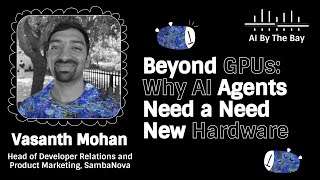 30mBeyond GPUs: Why AI Agents Need a Need New Hardware