Rethinking Developer Infrastructure

summary
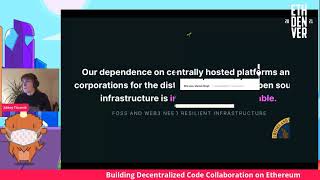
A decentralized replacement for GitHub is presented: a git-compatible system where every developer runs a node and updates propagate via a peer-to-peer gossip protocol. Repositories get content-addressed repository IDs built from an identity document (DID key + metadata). A desktop client exposes familiar UX and a web bridge; a live demo publishes a repo that is immediately seen by about eight seed nodes. Patches, issues and CI run as verifiable social artifacts rather than on a central platform.
AI-written summary · about
chapters (15)
- 0:00Introduction
- 0:36Code as free speech history
- 2:58Cipher punks movement legacy
- 4:23Ethereum cipher punk call
- 5:51Why dev infra matters
- 7:09GitHub’s centralized risks
- 8:59Non-democratic platforms problem
- 10:11Open source for user agency
- 11:24Git to decentralized tools
- 13:02Radical uses cryptographic primitives
- 16:13Radical’s git remote
- 17:25Demo: radical’s workflow
- 22:43Radical’s key features
- 23:34Peer-to-peer CI
- 24:00Call to action
related talks
 36mDecentralize everything! (or at least a part of your dev tools stack)
 20mBuilding Decentralized Code Collaboration on Ethereum
 29mRadicle: Towards decentralized code collaboration
 41mThe Future of Writing Software Happens in CDEs
 39mThe Future of Writing Software Happens in CDEs
 01h 00mThe Decentralized Web
 33mReinvent the social web
 14mResilience or Building on Quicksand: Decentralized Infrastructure