1 year of PaaS usage at SBB: lessons learned
summary
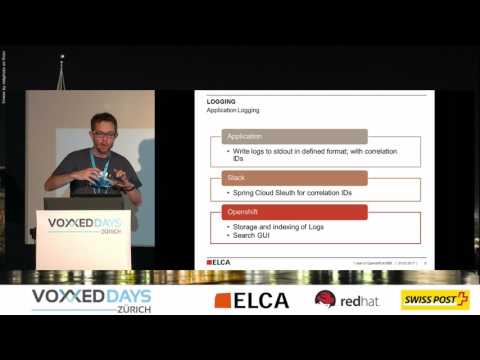
OpenShift v3 runs 20+ Java apps and about 800–1,500 containers across clusters with 400 in-house projects, delivering ~99.9% availability since 2016. CI uses Jenkins and Docker image builds with SSD-backed registries and caching; DB migrations use Flyway; health and circuit breakers use Spring Actuator and circuit breaker libraries; tracing uses Spring Cloud Sleuth; logs ship to an external SaaS (data residency issue). Hard lessons: one container does not count—apps must provide liveness/readiness, avoid root, handle rolling DB upgrades, and account for JVM CPU/memory quirks. Spring Boot fits well.
AI-written summary · about
chapters (14)
- 0:00Intro
- 0:35Welcome
- 0:58Context
- 2:21Developer perspective
- 5:14Technical features
- 6:17Build capabilities
- 7:03Learnings
- 7:39Capability reliability scalability
- 10:02Openshift load balancing
- 11:33Different stages
- 12:05Application tasks
- 12:33Overruns
- 13:07Top learnings
- 18:01Summary
related talks
 38mBuilding a high performing Passenger Information System
 41mOpenShift: a Kubernetes Story in an Enterprise Environment
 30mOpenShift: a Kubernetes Story in an Enterprise Environment
 17mDeployments We Can Believe In
 09mAjay Patel at SpringOne 2020
 39mExperiences and Lessons Learned Building a Multi-Cloud Spring Boot Backend
 06mRajesh Premchandran at SpringOne 2020
 40mBalancing agility and security: SBB’s journey to AWS(SEC204)