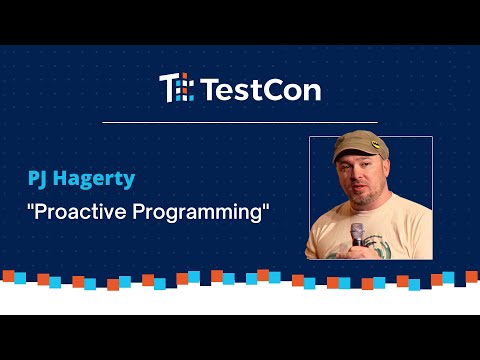
Proactive Programming
summary
Proactive programming claims that investing up front in foundation, tests and monitoring prevents later firefights; it favors a tight feedback loop of unit tests, CI/CD and observability over hacking straight to production. Tools named include ElasticStack Humio Splunk Travis CI and chaos tools like Gremlin, with an emphasis on sub-second latency queries and live-system experiments. Tradeoffs are explicit: initial work takes longer, risk of wasted effort if the anticipated failure never happens, but pivots (a game turned chat app) can validate the approach.
AI-written summary · about
chapters (10)
- 0:00Proactive Programming intro
- 3:18Proactive vs Reactive
- 6:30Reactive development problems
- 12:52Core principles
- 15:41Feedback loops
- 17:04Tools for proactive systems
- 18:05Chaos engineering
- 19:06Observability as tool
- 23:21Balancing tools and judgment
- 26:08Q&A
related talks
 29mProgressive Testing to Meet the Performance Imperative
 01h 04mBuilding on Success, Beyond the Obvious
 55mQuality Engineering Evolution: What Lies Ahead in
 32mI Test In Production
 52mTesting Reactive Apps
 33mTESTING IN PRODUCTION
 12mConvergent Quality Engineering
 47mHow to win in software development with tighter feedback loops