TESTING IN PRODUCTION

summary
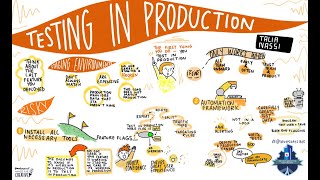
Claims that testing in production yields higher release confidence and faster dev velocity with concrete practices: use feature flagging (Split, LaunchDarkly) to target internal users, run automated checks (Robot Framework, Puppeteer) via a job scheduler, alert on failures (PagerDuty), mark test entities with is_test_user and exclude them from analytics, and roll out with a production canary (5% → 10% …) instead of costly staging (~$100,000 per year). Teams run tests ~20 times to build trust and report fewer post‑release bugs.
AI-written summary · about
chapters (11)
- 0:00Intro
- 2:41Why test in production
- 5:04My experience with staging
- 7:59What could go wrong
- 12:12Creating a feature flag
- 14:03Automation framework
- 17:12Creating test data
- 19:03Writing tests
- 20:38Deployment
- 22:22Summary
- 23:37Proactive Engineering Culture