Tulip: A Language for Humans
summary
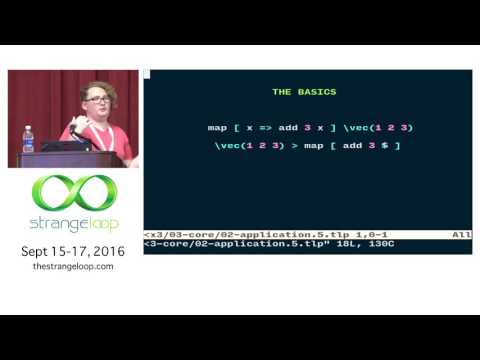
A new scripting language is implemented: a front end with ML-like syntax, a runtime with Erlang-style processes, and an LLVM JIT that already emits x86. Key claims: it eliminates nil by using tagged sums (some/none/ok/error), uses tag-words and pattern matching for data, and puts all heap allocations inside lightweight processes. The JIT runs and shows SML/OCaml-class performance; the compiler and runtime wiring and full process semantics are unfinished and a stable release is more than a year away.
AI-written summary · about
chapters (20)
- 0:00Introduction
- 0:25What makes Tulip special
- 7:19Basic Syntax
- 10:45Blocks
- 12:39Tag Words
- 15:40Null
- 16:11Nothing
- 19:46Abstraction Tools
- 25:48Processes
- 26:44Syntax
- 30:40Semantics
- 33:06Formal abstraction
- 33:52Runningtime
- 34:58Embedding
- 37:27Debugging
- 39:29Web Programming
- 41:26Compiler
- 41:52Design
- 42:04Takeaway
- 43:08Contact
related talks
 28mSuggestions for a Totally Better Programming Language
 43mProgramming Languages for the Future of Design Computation
 39mUsing PL Theory to Make People Happier
 41m"Natural Interfaces" and "Natural Language Programming"
 01h 02mBasics Designs and How We Got Them Wrong
 59mUI as Warm as a Baked Potato
 53mPoems in an accidental language
 13mClojure.spec: A Lisp Flavoured Type System