A Practical Introduction to Productionizing NLP Models

summary
A chat intent detector is built and validated using the SNIPS dataset, pre-trained spaCy 380‑dim vectors for embeddings and standard deep models (LSTM or CNN) with a documented tradeoff: LSTMs usually perform better, CNNs run faster. Data strategies include synthetic labeling via Mechanical Turk and a heuristic emoji method that reached ~75% out‑of‑sample accuracy on Twitter. Deployment options include server microservices or client‑side inference with TensorFlow.js; a browser demo loads in ~18 seconds then responds with low latency. Code lives at bitly practical NLP.
AI-written summary · about
chapters (14)
- 0:00Intro
- 1:02What is Machine Learning
- 4:13You can add intent detection to your app
- 9:05What is Deep Learning
- 10:22No Data? Not Ain Insurmountable Problem!
- 12:31Our Solution: Publicly Available Data
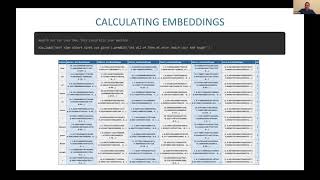
- 16:44Embeddings made easy
- 17:40Embeddings made even easier
- 19:18Modeling is not the hard part
- 20:02The models you should use
- 21:28NLP Apps are Resource-Greedy
- 23:43Miscellaneous Best Practices
- 24:19Bonus: Client-Side Deep Learning
- 25:37A starting point
related talks
 30mBuilding Complete State of the art Natural Language Processing
 21mFrom 0 to a crowd sourced neural network in a jiffy
 55mDemystifying Natural Language Processing across several industry verticals
 57mMachine Learning with JavaScript
 30mProductionizing an unsupervised machine learning model to...
 17mNatural Language Processing in Automation
 18mReality is not an end-to-end prediction problem
 12mUnlocking the Power of NLP: Techniques in K8s-Native Applications