Introduction to Akka Actors: Concurrency and Distributed Systems for the JVM
summary
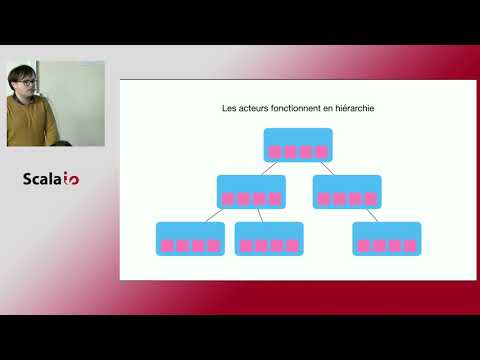
Introduces Akka on the JVM as an implementation of the actor model to avoid race conditions without locks by processing each actor sequentially and using supervisor hierarchies for fault recovery. Compares resource cost (actors ~300 bytes vs threads ~1 MB) to argue thousands of actors are cheap, presents a local dual‑core MacBook Pro benchmark where an asynchronous actor version gave about a 44% throughput gain over lock‑based code, and demonstrates a clustered key‑value example where nodes join, serve buckets, and can survive a node failure (with data on the failed node lost).
AI-written summary · about
chapters (11)
- 0:00Introduction
- 1:53Processor evolution and parallelism
- 3:59Akka Actors intro
- 5:03Actor theory: operation and hierarchy
- 8:33Actors vs threads: benefits
- 12:50Race conditions and fixes
- 19:17Bank account modeling
- 27:30Actors vs locks: performance
- 29:38Akka clustering
- 34:42Distributed key-value store demo
- 39:35Q&A
related talks
 40mActors in .NET, 2025 edition
 42mLeveraging the Actor Model in Financial Transaction Systems
 41mAkka in Production: Our Story
 01h 01mEvolving an Actor Library Based on Lessons Learned from Large-Scale Deployments
 58mLife with actors: experience report
 56mAkka in Heterogenous Environments
 43mEffective Eventual Consistency with Actor Models + Amazon Web Services
 44mThe Road to Akka Cluster, and Beyond