"A Hitchhiker’s Guide to Adopting Rust at Your Company"

summary
Amazon traces Rust usage back to 2016 and reports hundreds of teams and thousands of developers adopting it, but adoption succeeds only with concrete payoff: tail latency, memory, cold start, or reliability wins. Teams without an expert are 40% more likely to give up; teams with experts report easier production shipping. Real examples: Fire TV sees a 10x memory reduction by replacing hot spots, cargo-bloat and Clippy surface fixes, Turmoil and PollCatch enable fault and async debugging, and flame graphs reveal a 10x speedup after fixing a regexp hotspot.
AI-written summary · about
chapters (18)
- 0:00Introduction to Rust adoption
- 1:03Real reasons to adopt Rust
- 3:57Four stages of Rust adoption
- 4:38Case study: Python team’s Rust rewrite
- 5:40Case study: Fire TV’s Rust success
- 7:49When Rust is the right choice
- 11:45Empowering Rust pragmatists
- 14:56Team learning strategies
- 17:27Onboarding new Rust developers
- 19:13Role of Rust pragmatists
- 21:41Getting stuff done with Rust
- 23:06Tooling and library choices
- 25:11Building missing tools
- 26:37Operating Rust in production
- 29:23Debugging performance issues
- 31:32Investing in operational tooling
- 32:54Upfront technical debt in Rust
- 33:15Future growth areas for Rust
related talks
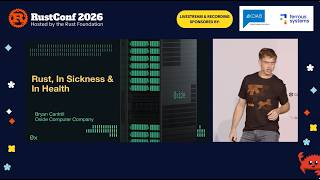 29mRust, In Sickness & In Health
 22m"Rust Training at Scale"
 13mGetting hired in Rust - Recruiter's perspective
 26mPiecing together Rust: It is more than just writing code
 16mThe Illustrated Adventure Survival Guide for New Rustaceans
 27mWhy you, as a Python developer, should learn Rust
 27mSupercharging Rust Communities
 35mHitchhikers Guide to Growing Your Tech Skills.