The Challenges of Building sigstore-ruby

summary
A pure Ruby implementation of sigstore verification and signing ships as a gem and reaches production use within months, but it requires reimplementing many low-level pieces: pure Ruby implementation, X.509 parsing and path validation, RFC 3161 timestamp and signed certificate timestamp handling, two JSON canonicalizations including RFC 8785 JSON canonicalization, TUF client and Merkle inclusion proofs, support for RSA/EC/DSA/Ed25519, and workarounds for OpenSSL/JRuby gaps; conformance tests finally make interoperability realistic.
AI-written summary · about
chapters (7)
- 0:00Introduction and background
- 2:19What is SigStore Ruby
- 8:23Implementation goals and challenges
- 13:45End-to-end verification complexity
- 20:09Ruby standard library limitations
- 26:35Why it got so complicated
- 29:25Future outlook and conclusion
related talks
 29mFrom Cosign to an Ecosystem: The Evolution of Sigstore
 36mSigstore: Past, Present and Future Directions
 34mPolicy Compliance with Sigstore: From Signing Software to Validating the Whole Softwar...
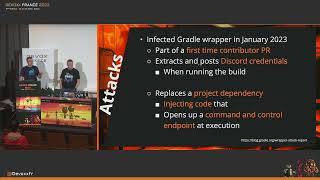 02h 45mSoftware Supply Chain Security with Sigstore
 23mSoftware Supply Chain Integrity with Sigstore
 35mAn introduction to Sigstore for Pythonistas
 30mRuby OpenSSL Present Future and Why It Matters
 33mSo You Want to Run Your Own Sigstore: Recommendations for a Secure Setup