Face Recognition

summary
Trueface compresses a facial model from ~400–500 MB to a 5 MB edge model that runs on Raspberry Pi–class hardware, represents faces as a 512-dim template, and claims the backend can scan 1 billion faces/sec for one‑to‑N hits. Demonstrated impacts include cutting a 50‑minute boarding process to 25 minutes at airports, age estimation with ~2.5 years mean error, GANs for synthetic balanced datasets, liveness checks (heartbeat, blinking), and anonymized matching to avoid storing names. Regulation and bias remain unresolved.
AI-written summary · about
chapters (25)
- 0:00Introduction
- 0:27What is facial recognition
- 2:34Facial recognition history
- 3:19Oktoberfest
- 4:09Anonymous Facial Recognition
- 4:41Privacy Concerns
- 6:52Bias
- 8:24Datasets
- 10:11What does this mean
- 10:50Travel
- 13:53Airport
- 14:10Safety
- 15:08Fraud Reduction
- 15:43Convenience
- 16:09Security
- 16:45Access Control
- 17:34Future of Facial Recognition
- 20:30Age Recognition
- 21:04Responsible Use
- 21:39Accidental Consent
- 23:03Ethical Regulation
- 25:44Age Estimation
- 26:49Twins
- 27:59adversarial attacks
- 29:11face recognition hash
related talks
 57mFoundations of Facial Recognition
 33mReal-Time Face Recognition: Training Fast and Accurate Models
 40m"Introduction to Face Processing with Computer Vision|"
 52mFace Recognition: From Scratch To Hatch
 13mHow we used Face Detection to create a delightful User Experience
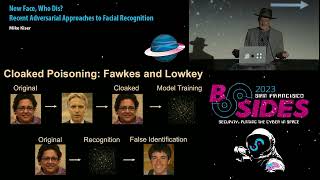 26mNew Face, Who Dis? Recent Adversarial Approaches to Facial Recognition
 56mDeep Fakes 2.0 - How Neural Networks are Changing our World
 50mCabbage, or recognizing 330 million faces at 1000 photos/sec