Empowering ML Developers
summary
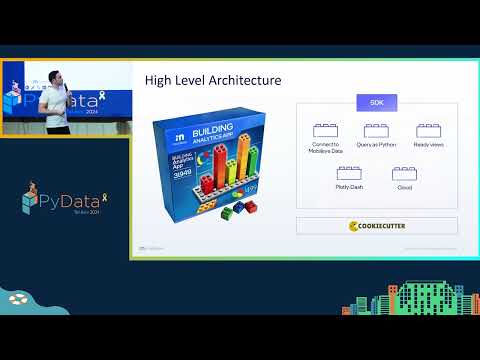
Platform lets ML teams ship custom web analytics from plain Python code and removes the need for deep SQL or cloud expertise, claiming to cut dependence on dedicated BI engineers while handling hundreds of millions of model rows by reducing scores into a fixed number of buckets. Implementation uses Dash + Plotly for visuals, Parquet-backed bucketing and server-side query generation plus validation to block costly SELECT * or type-mismatch joins. Delivered as an SDK with reusable React-wrapped components, cookiecutter starters and mkdocs-driven onboarding, and it runs in production.
AI-written summary · about
chapters (13)
- 0:00Introduction to Mobili
- 1:50Big data challenges in ML
- 3:38Failed BI system approach
- 4:42Dash for interactive apps
- 6:11SQL wrapper benefits
- 7:18SDK architecture overview
- 8:45User experience with SDK
- 12:23Demo RC curve visualization
- 15:40Handling large datasets
- 16:41Final visualization demo
- 17:47Onboarding best practices
- 19:56Query efficiency with Parquet
- 20:17Summary and Q&A
related talks
 21mData-driven approaches in a technology startup
 27mML Platform Journey
 31mUse-Case Driven ML Platforms
 29mBuilding an ML Platform from Scratch
 24mSmart approach in development and deployment process for ML models
 37mLowering the barrier for ML monitoring
 02h 00mData Science Driven Business Insights with Python and PySp
 32mTeam Teardown: Evolving an ML Platform