cudf.pandas: The Zero Code Change GPU Accelerator for Pandas

summary
Claim: run existing pandas code on GPU with zero code changes by swapping in a proxy that routes supported ops to cuDF/CUDA and falls back to pandas when needed. Demo shows big speedups for groupby merge and string ops, a slowdown for count axis=1 due to data movement. Tools: libcudf, importlib import hacks, a notebook profiler that reports GPU vs CPU time. Compatibility notes: 100% pandas API claim with caveats, passes 94% of pandas tests.
AI-written summary · about
chapters (15)
- 0:00cudf.pandas introduction
- 1:05Pandas slowness and alternatives
- 3:14What is cudf.pandas
- 5:21Demo setup and usage
- 6:45Live GPU vs CPU demo
- 9:35How GPU acceleration works
- 11:23Third-party library compatibility
- 12:04Performance optimization tips
- 13:10Debugging with profiler
- 15:40Rewriting for GPU efficiency
- 16:01LangChain acceleration
- 19:18Architecture deep dive
- 20:44Pandas compatibility
- 22:53FAQ about cudf.pandas
- 24:37Q&A
related talks
 30mHacking `import` for speed: how we wrote a GPU accelerator for pandas
 31mcuDF: RAPIDS GPU-Accelerated Dataframe Library
 29mA Beginners Guide to GPUs for Pythonistas
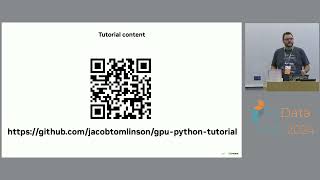 02h 28mGPU Accelerated Python
 39mAccelerated Data Science Libraries
 01h 36mRAPIDS: GPU-Accelerated Data Science for PyData Users
 01h 12mGPU-Accelerated Data Analytics in Python
 30mCuPy: A NumPy-compatible Library for GPU