What cyber security can teach us about COVID-19 testing

summary
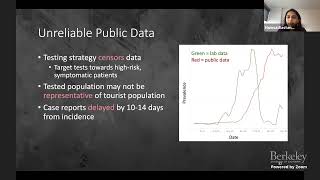
Claim: allocate a small share of tests to systematic exploration and the rest to high-risk ranking, and governments learn spread fast while keeping case-finding high. Method: cast testing as a Multi-Armed Bandits problem, implement an epsilon-greedy 70/30 policy that re-ranks candidates each week, and train simple ranking models on Israeli Ministry of Health data. Result: simulation and bootstrapped weeks show big gains — e.g., about 66% of positives found at 10% capacity and 92% at higher allocation.
AI-written summary · about
chapters (8)
- 0:00COVID-19 testing challenges
- 3:54Risk-driven testing limits
- 6:46Cyber security monitoring parallel
- 9:57Exploration vs exploitation in testing
- 14:12Ranking COVID-19 candidates
- 18:49Adaptive testing framework
- 20:35Exploration strategies implementation
- 22:00Conclusion and future
related talks
 32mCountry-Scale Bandit Implementation for Targeted COVID-19 Testing
 01h 01mEfficient and Targeted COVID-19 Border Testing via Reinforcement Learning
 42mThe Cybersecurity Goldilock Problem: Finding Just-Right
 22mCOVID-19: Data Science & Expertise
 37mAI/ML Strategies & Techniques for a Post Pandemic World
 37mMore Than a CSIRT: Lessons Learned from Supporting a National Response to COVID-19
 50mThe ART of Probable: Test with AI, Atomic Red Team, and Threat Metrics
 01h 21mEmpirical methods fairer AI - Auditing a Dutch public sector risk profiling algorithm