Advancing Performance via a Systematic Application of Research and Industrial Best(…)

summary
Productized LXR into Google’s environment, implemented in MTK with OpenJDK11, and closes the gap with specialized production collectors: optimized LXR outperforms G1 by about 11% geometric-mean speedup on standard benchmarks and yields a roughly 9% productization improvement over the original research build. Key techniques are reference counting with deferred, coalescing, and implicit optimizations plus immix-style image-space evacuation; pathology mapping reproduces production pathologies (e.g., compressed pointers hitting a 31.5 GB virtual-memory boundary) to fix correctness and fragmentation.
AI-written summary · about
chapters (9)
- 0:00AXAR garbage collector intro
- 1:05AXAR GC design components
- 3:12LSJ workload challenges
- 4:14Pathology mapping methodology
- 6:41AXAR GC performance
- 9:11AXAR on RSJ server
- 10:15Five lessons from productization
- 12:23Productization dividend and future
- 13:06Conclusion and Q&A
related talks
 50mPerformance: Avoiding Pitfalls, Diagnosing Issues & Scaling for Growth
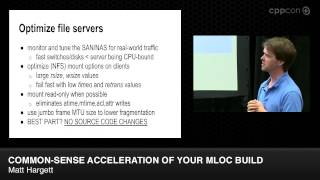 01h 04mCommon-sense acceleration of your MLOC build
 16mXkernel: Principled Performance Tunability of Operating System Kernels
 26mStrategies for Mitigating Performance Interference in Cloud-Native Systems
 30mState of the Union
 33mReducing Bazel's Memory Consumption
 18mLet the machines optimize the machines
 25mFrom Continuous Profiling to Continuous Optimization