Vesper: Measuring Time-to-Interactivity for Web Pages
summary
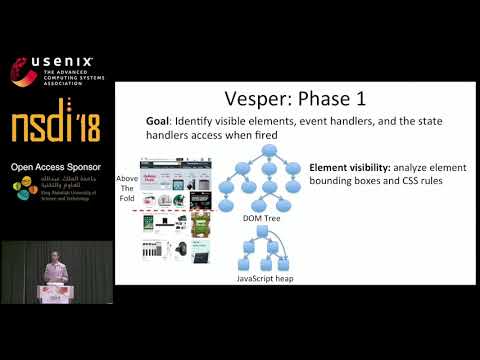
Proposes a concrete interactivity metric called Ready Index and a rewiring tool Vesper that discovers which DOM nodes and JS heap variables must be loaded for above‑the‑fold functionality. Vesper uses heavy offline tracing (Scout logs) then lightweight logging to measure readiness with 4.5% and 1.9% overheads. Across 350 sites and varied RTTs, prior metrics misestimate time‑to‑interactivity by 24–64%; optimizing with Vesper and Polaris cuts median time‑to‑interactivity by ~29–32% and 83% of users prefer the interactivity‑optimized pages.
AI-written summary · about
chapters (9)
- 0:00Start
- 3:58Existing Metrics
- 9:26Measuring Ready Index (RI)
- 10:02Vesper: Overview
- 10:31Vesper: Phase 2
- 14:17Evaluation Outline
- 19:06User Study 2: Rendering
- 20:03Conclusion
- 22:41THE ADVANCED COMPUTING SYSTEMS ASSOCIATION
related talks
 18mVinicius Dallacqua at performance.sync()
 23mPerformance Optimizations for Progressive Web Apps
 11m"Time is Money - The Measurable Value of Performance by Design"
 24mUnderstanding and Optimizing Interaction to Next Paint (INP)
 25mOptimize for interactivity using Web Vitals (FID/TBT)
 30mMeasuring Web Performance - Metrics & Tools
 54mThe Latest in Metrics & Measurement
 16mThe state of responsiveness on the web