Using a Bayesian Neural Network in the Detection of Exoplanets

summary
NASA TESS simulated data covers 26 sectors with 27‑day watches at ~30‑minute cadence; processing yields 64,000 target stars and ~9,000 signals (~10,000 TCEs). The pipeline extracts local view light curves, oversamples to 50/50, embeds Python in kdb+/q for training, and uses a Bayesian Neural Network (500 Monte Carlo samples per instance) to output probability distributions. Final results report 91% accuracy and 83% precision.
AI-written summary · about
chapters (5)
- 0:00Company overview
- 2:06Introduction to Q
- 5:56Exoplanet detection challenge
- 10:05Data pipeline and challenges
- 15:47Machine learning solutions
related talks
 45mStars, Planets, and Python
 37mCounting the Stars
 36mTwinkle twinkle little star, how I wonder what you are
 27mAI-ML and space exploration at NASA
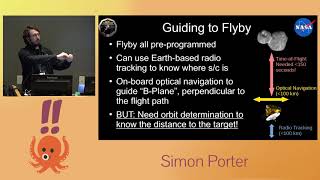 15mGuiding a starship with noise! And blinking!
 37mRecent Solutions Using Deep Learning Models/ The How and Why
 14mCloud-Native AI for Fraud Prevention with Bayesian Networks
 45mData Mining in Astronomical Survey Data of Variable Stars with Python