Layla El Asri, Research Scientist, Maluuba, NYC 2017

summary
Describes a concrete pipeline and results: a separation of concerns RL architecture splits tasks into subtasks (one agent per subtask) and is tested on a Pac‑Man-like TimeVoid with 75 fruit agents, two ghost agents, 76‑state agents, +1/−10 rewards; it reaches near‑optimal scores within ~10 epochs and finishes episodes in ~100 steps versus DQN’s ~14% human‑normalized score and 300‑step timeouts. Presents an active perception model that peeks pixels and learns with RL to label synthetic flowers efficiently, and a 1,400‑dialogue (≈20,000 turns) dataset plus Frame tracking for memory in task‑oriented dialogue (model pending).
AI-written summary · about
chapters (6)
- 0:00Intro
- 0:31Maluuba's Vision: Solving AGI by Creating Literate Machines
- 5:45Learning to Learn
- 11:50Configuration 1 agent per fruit 1 agent per ghost
- 15:21Learning to Perceive
- 21:52Learning to Communicate
related talks
 41mBringing stories to life with AI, data streaming and generative agents
 42mComputer-Use Agents: From SFT to Classic RL
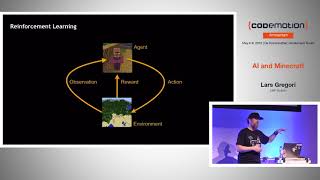 32mAI and Minecraft
 32mEnd-to-End Optimizing Multi-Turn RL and High-Performance Inference in Agents with...
 15mAgentic Reasonings with Reinforcement Learning
 32mThe Road to General AI
 17mMatineh Shaker, Artificial Intelligence Scientist, Bonsai
 24mRecursive Coding Agents