Claudia Perlich, Chief Scientist, Dstillery

summary
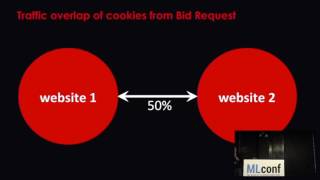
Argues that optimizing for clicks backfires because click is a terrible metric — optimization surfaces non‑purchase behaviors (flashlight apps, motor issues) and automated actors, so a bot traffic network detector built from cookie–URL co‑occurrence improves signal. Proposes building separate models for treated and untreated to estimate causal lift; validates against an A/B test and a null pizza ad. Shows aggregate reports can train measurement‑aligned classifiers, and that location feeds contain absurd errors like 30% travel faster than sound so a lat/long accuracy classifier is needed.
AI-written summary · about
chapters (11)
- 0:00Start
- 1:57Predict Other indicators: search or brand site visit/schedule test drive
- 2:52Data for Fraud Detection
- 3:11Bot traffic networks and
- 4:12Data for Advertising Impact
- 5:00Fundamentally Impossible!
- 5:51Use predictive models to measure impa
- 7:22Relationship of organic conversion rate and causal impact
- 9:18Data for Audience Optimization
- 10:32Hyperlocal Targeting? • Foursquare locations: very noisy...
- 11:30Catalan traditions pop up everywhere....
related talks
 25mClaudia Perlich, Chief Scientist, Dstillery, NYC 2017
 30mPredictive Analytics in Social Media and Online Display Advertising
 30mMeasurement in a Privacy First World
 20mWinning the Game: Leveraging Contextual Bandits for Creative Optimization
 21mRise of the Machines: Removing the Human-in-the-Loop
 46mFrom correlation to causation: measuring ad effectiveness at scale
 34mA Human Touch to Consumer Experience Powered by Data
 24mOffline Ranking Validation - Predicting A/B Test Results