Hacking Hardware for Hugs and Profit!

summary
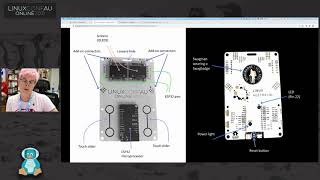
Late-night dorm hack turns into a badge that reliably detects 700–1000 ms hugs using an ESP8266 → ESP32 upgrade and VL6180X time-of-flight sensors; infrastructure runs an ECS cluster + MQTT with heartbeat, TLS via Let's Encrypt, and an algorithm that avoided a Twitter shadowban. Early bugs included a five-second timeout and a one-character memory-corrupting lights loop that was fixed on the fly; badges worked across LCA 2017–2020, parked on GitHub as "Been Hugged" (techman83).
AI-written summary · about
chapters (10)
- 0:00Introduction
- 1:09Hardware hacking for profit
- 3:50First hug badge prototype
- 6:00ESP32 upgrade Sydney LCA 2018
- 8:09AWS integration LCA 2019
- 10:49LCA 2020 badge chaos
- 13:25Whimsical to practical IoT
- 16:21Tools and open source
- 17:48Summary and future plans
- 18:33Q&A
related talks
 21mHacking Hardware for Hugs and Profit!
 35mWe Built 2,000 Custom Electronic Badges for Our Developer Conference, Replay (Here's How)
 06mEthical Hacking for All Ages: Hardware Hacking with Script Kitty
 47mSwagbadge 101: Software and the Aiko framework
 18mSex, Circuits, and Deep House
 45mLessons Learned from Building Custom Hacker Hardware
 48mFatal Fury on ESP32: Time to Release Hardware Exploits
 46mSwagbadge 101: Hardware and SAOs