When Things Get Big

summary
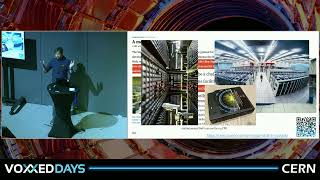
CERN runs ~3,000-node farms that must launch 30,000 apps in <90s for online filtering; early Kubernetes 1.5 achieved ~12 containers/s, later tuning reached ~57/s and a 2,500-node test started target workloads within seconds to minutes (approaching the 90s goal). Big experiment images can be 19–125 GB (uncompressed) but jobs touch only ~6% of files, so a srgz remote rootfs using HTTP range requests and containerd remote mounts streams files on demand; demo shows cold-start drops from ~50s to ~4–5s and network/disk use falls dramatically. Kueue/cohort and fair-share queuing address batch priorities.
AI-written summary · about
chapters (12)
- 0:00Introduction
- 1:05CERN needs large-scale computing
- 3:12ATLAS experiment online computing
- 5:45Scaling 30 000 applications in 90 seconds
- 7:55Transition to Kubernetes
- 8:15Offline computing challenges
- 9:39Multi-cluster scheduling
- 13:08Scaling software distribution
- 17:28Image streaming solutions
- 21:23Image streaming demo
- 24:54Future hybrid cloud plans
- 27:06Q&A
related talks
 30mSpeeding Up Analysis Pipelines with Remote Container Images
 47mCloud Native and Sustainable, Reproducible Scientific Computing
 21mKeynote: CERN Experiences - Ricardo Rocha & Clenimar Filemon
 55mCloud services for gaming
 19mKeynote: Building Bridges: Cloud Native and High Performance Computing
 34mPanel: Improving and Managing Kubernetes at Scale
 43mContainers Change Everything
 29mScale Your Batch / Big Data / AI Workloads Beyond the K8s...