Accessibility first is the new Mobile first

summary
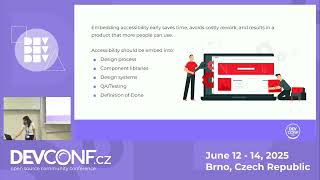
Argues for making accessibility a first-class practice, showing concrete wins: using semantic HTML and ARIA, enforcing WCAG levels (A/AA/AAA) in design, writing tests with testing-library selectors so UI is actually operable, and running axe/browser extension audits. Notes automated tools catch only about half of issues so teams add manual screen reader checks and keyboard flows, gate PRs on accessibility fixes, and see measurable benefits — fewer rewrites, broader audience, legal risk reduced, and everyday UX improvements for all.
AI-written summary · about
chapters (15)
- 0:00Intro
- 0:27Background
- 2:13Accessibility first
- 6:14What is accessibility
- 7:22How to be accessible
- 12:56Guidelines
- 14:07Rules for short
- 15:58Quick reference
- 16:28Why be accessible
- 18:51Accessibility benefits everyone
- 21:56Accessibility testing
- 24:02eslint plugins
- 24:26Axe
- 26:19Manual testing
- 27:39Summary
related talks
 26mAccessibility Is a Marathon, not a Sprint
 12mAccessibility-First Development: Making Applications Inclusive from Day One
 19mAccessibility isn't hard; getting people to see it's easy can be with Sarrah Vesselov
 42mArchitecting for Accessibility
 28mBuilding in accessibility for broader value to all
 31mWeb Accessibility: From Design to Code, How to Move Toward Greater Inclusion
 37mAccessibility Matters: Creating a Better Web
 33mAccessibility needs to be the future of better technology