Supercharge your JVM performance with Project Leyden

summary
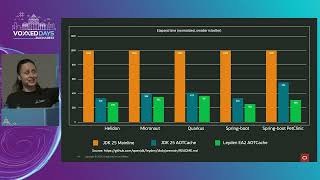
Project Leyden with JDK25 shortens startup and time‑to‑peak by supplying an AOT cache created from a training run; JDK24 introduced a three‑phase workflow and JDK25 adds a two‑phase option. Practical results include Spring PetClinic starting in 0.951s on a laptop and earlier hello‑worlds showing ~62% startup improvement (plus ~9% with early AOT). Workflow rules: generate cache on the same JDK/OS/arch, preserve jar timestamps, avoid wildcards/nested jars, and use Spring Boot extract + --spring.context.exit-on-refresh for best results.
AI-written summary · about
chapters (17)
- 0:00Introduction
- 1:57Leyden goals and JVM challenges
- 3:00Startup and warm-up issues
- 4:06Shifting JVM workloads
- 5:11Training runs for optimization
- 6:37JDK 24 workflow
- 9:49JDK 25 workflow
- 12:41AOT cache requirements
- 15:51Spring Boot optimizations
- 17:15Performance trade-offs
- 22:31Live demo: Pet Clinic
- 26:31AOT vs Spring AOT
- 28:41AOT cache in containers
- 33:18Cache management
- 36:11Leyden future in JDK 26
- 41:23Adopting newer JDKs
- 42:50Q&A
related talks
 41mSupercharge your JVM performance with Project Leyden
 42mSupercharge your JVM performance with Project Leyden and Spring Boot
 45mSupercharge your JVM performance with Project Leyden and Spring Boot
 45mProject Leyden: Improving Java’s Startup Time
 43mStep up the performance game with Spring Boot and Project Leyden
 46mProject Leyden's AOT - Shifting Java Startup into High Gear
 46mAssembling Project Leyden
 48mProject Leyden - Capturing Lightning in a Bottle