Disrupting the Media Industry with Generative AI Challenges Questions and Opportunities
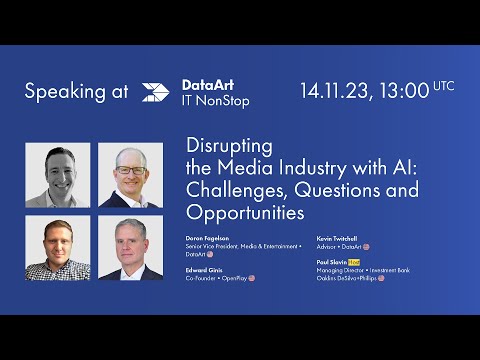
summary
Panelists argue generative AI proves most valuable for automation tasks — auto-translating metadata into 240 languages, detecting barcodes on artwork and surfacing playlist hits from billions of records — while creative use raises copyright and quality risks. They flag surprising scale: ~100,000 tracks a day on Spotify and the flood of low-quality generative output, discuss LLMs, watermarking and cryptographic provenance (Content Authenticity Initiative), and recommend proof-of-concepts, solution‑design phases and hiring a technical advisor or fractional CTO before large builds.
AI-written summary · about
chapters (20)
- 0:00Introduction and panelists
- 3:31Most exciting aspects of AI
- 8:11AI's creative and analytical potential
- 10:18Concerns about AI in media
- 13:08Mediocrity and copyright fears
- 16:38Comparison with cloud technology concerns
- 18:00Data protection and compensation issues
- 20:46Deepfakes and content authenticity
- 24:20Watermarking and AI regulation
- 27:28Human vs AI battle in content
- 28:54Industry reactions to AI investment
- 30:16Practical steps for media companies
- 32:25Business objectives and AI adoption
- 34:11Role of fractional CTOs and advisors
- 37:06Industry expertise in AI solutions
- 41:42Passion and technical advisory
- 44:10Decision-making in AI projects
- 45:57AI transformation as rocket launch
- 47:22Three-step approach to AI adoption
- 52:22Closing remarks and Q&A