AI in Heavily Regulated Areas: Finance, Insurance, and Life Sciences
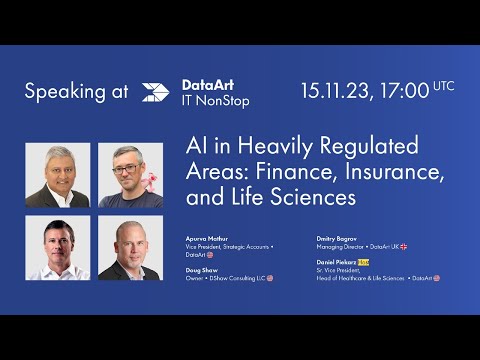
summary
Regulated industries report concrete wins and concrete risks: regulators see a jump from ~50 cleared AI medical tools over 20 years to ~500 in five years, and use cases include medical imaging, drug discovery and pharmacogenomics, plus mental‑health chatbots aimed at massive scale. Teams build a chatbot for manuals that flags conflicting safety rules and a generative‑AI pipeline that converts legacy code, proving a 30-40% improvement in developer efficiency; life‑science workflows use a pre-approved Change Control plan to allow monitored model learning.
AI-written summary · about
chapters (14)
- 0:00Introduction and panel setup
- 2:57AI in healthcare and life sciences
- 8:27AI disruption across regulated industries
- 12:47Regulations slowing AI adoption
- 17:27Self-learning AI in medical devices
- 21:45AI risks in medical devices
- 26:45Obstacles to AI implementation
- 31:44Finding AI talent and resources
- 35:57Legal and regulatory obstacles
- 40:15Ethics and AI transparency
- 47:02GAMP and AI best practices
- 51:42Regulating AI ethically
- 55:36Selling AI strategy to executives
- 1:03:04Closing remarks and Q&A