Superiority of a Handheld Perspective-Coupled Display in Isomorphic Docking Performances

summary
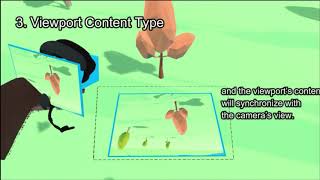
A controlled study with 20 participants and 8,000 dockings compares four isomorphic setups (Phantom Omni, tangible prop, SDK2 HMD, and a handheld perspective‑coupled display rendered with stereoscopic projection and OptiTrack tracking) using a 15 cm sphere input and five target IDs. Results show HPCD 17% faster than HMD, HPCD yields about +1 byte/s throughput, prop beats Phantom by ~20%, and HMD beats prop by ~12%. The work also introduces a 6 DOF index of difficulty (ET) combining translational and rotational tolerance.
AI-written summary · about
chapters (20)
- 0:00Introduction
- 0:48Isomorphic Manipulation
- 1:28Docking Experiment
- 2:19Demonstration
- 3:01Studies
- 3:31Metrics
- 4:02Quick Reminder
- 4:30Symmetries
- 5:19Checkbox Game
- 5:42ET
- 6:44User Studies
- 7:11Conditions
- 8:19Repetition
- 8:39Results
- 10:24Explanation
- 11:13Resolution
- 11:39Contextual Information
- 12:13Error Correction
- 13:32What to Remember
- 14:10Impact on the Task
related talks
 08mThe Effects of Hand Representation on Experience and Performance for 3D Interactions in Virtual R...
 19mHaptic Retargeting: Dynamic Repurposing of Passive Haptics for Enhanced Virtual Reality Experiences
 09mHMD Light: Sharing In-VR Experience via Head-Mounted Projector for Asymmetric Interaction
 09mRetargeted Self-Haptics for Increased Immersion in VR without Hand Instrumentation
 09mModularHMD: A Reconfigurable Mobile Head-Mounted Display Enabling Ad-hoc Peripheral ...
 09mTangibleData: Interactive Data Visualization with Mid-Air Haptics
 15mGyroSuite: General-Purpose Interactions for Handheld Perspective Corrected Displays
 05mHaptic PIVOT: On-Demand Handhelds in VR