Security Analysis on the Attack Surface of Blockchain Client
summary
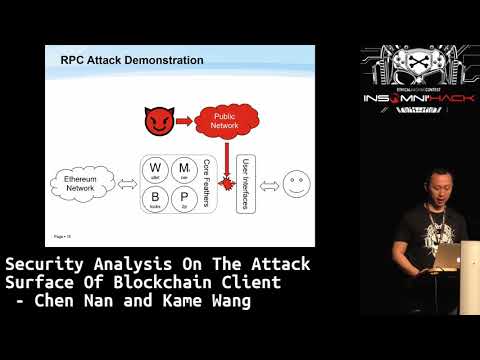
Tencent Zhanlu Lab reports 10+ client vulnerabilities and publishes CVE-2018-16733, CVE-2018-18206, CVE-2018-18078–81 as examples. An analysis system combines a honeypot and node detector with scanning to find RPC ports; results show attackers steal >60,000 ETH from exposed nodes, a 700-entry password dictionary, and >13% of Neo nodes vulnerable, with >15 nodes leaking mining rewards. Root causes include exposed RPC, integer overflows in P2P and smart-contract interpreters, an OOM in BFT prepare lists, and a Bitcoin Core double-spend path found via regex-driven code patterns.
AI-written summary · about
chapters (22)
- 0:00Introduction and speakers
- 1:54Research background and agenda
- 2:36Blockchain basics and attack trends
- 5:27Attack surfaces overview
- 6:11RPC interface vulnerabilities
- 8:21P2P discovery attack surface
- 10:29P2P synchronization attack surface
- 12:18P2P consensus attack surface
- 14:26Smart contract attack surface
- 17:52RPC attack case study
- 19:40RPC attack risk factors
- 21:08Finding bugs in blockchain code
- 24:05Common vulnerability patterns
- 28:55Locating attack surfaces in code
- 31:05Smart contract vulnerability auditing
- 32:31Real-world RPC vulnerabilities
- 36:27Analysis system results
- 37:52P2P protocol vulnerabilities
- 40:28Bitcoin Core transaction validation flaw
- 41:56Smart contract interpreter vulnerabilities
- 43:03Multiplication overflow in smart contracts
- 43:48Conclusion and Q&A