The Wonders of Abstraction

summary
Argues that abstraction is a precise mapping from concrete to abstract and traces concrete evidence: 2.6 million‑year stone tools with iterative feedback that work as scrapers, 1.4 million‑year hand axes, 20,000‑year arithmetic showing homomorphism and right inverse, Euclid’s small axioms with compass and straightedge, Al‑Khīrizi’s algebra unifying structures, Galileo’s ramp and bells as meta iterative refinement, Newton’s scoped models, and Turing’s virtual machines. Proposes treating the computer as the abstract domain and shows a bank digitization as a compiler‑defined, test‑verified chain that actually runs.
AI-written summary · about
chapters (16)
- 0:00Introduction and welcome
- 1:47Childhood inspiration from Mr. Wizard
- 5:21Programming and abstraction connection
- 7:31What is abstraction?
- 11:47Mathematical definition of abstraction
- 14:39Cognitive archaeology and stone tools
- 20:22Cultural evolution of abstraction
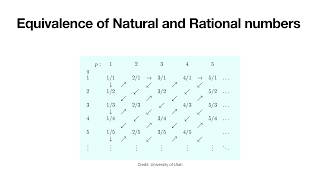
- 21:52Abstraction in arithmetic
- 25:26Homomorphism and right inverse
- 28:19Euclid's Elements and formal systems
- 31:09Algebra and meta abstraction
- 34:01Aristotle vs Galileo on physics
- 39:01Newton and iterative refinement
- 41:31Turing and computer abstraction
- 44:41Computers as abstraction instruments
- 48:16Summary and call to action