Communities of Practice, the Missing Piece of Your Agile Organisation

summary
Argues that cross-team communities of practice deliver concrete outputs: design patterns, training programs, code tests and interview kits, career ladders and even an internal agile transformation strategy at a UK bank, not vague meetups. Recommends weekly one-hour meetings (GDS delivery managers meet weekly), recording talks, using Slack (random channel) and a shared Trello backlog for work. Cites productivity links (unhappy −12%, happy +10%) and 4.4-year average job churn; expects a dip in energy, core/active/occasional/peripheral membership, and eventual senior sponsorship to scale.
AI-written summary · about
chapters (15)
- 0:00Introduction
- 7:55Silos
- 12:01Sense of Community
- 14:33Learning
- 19:59Knowledge Management
- 25:28Collaboration
- 29:40Getting started
- 34:20Time
- 36:13Community Empowerment
- 37:46Types of Community Members
- 38:59Dont Become Your Own Silo
- 40:03Roundup
- 40:21Remember
- 40:36Book
- 40:55Questions
related talks
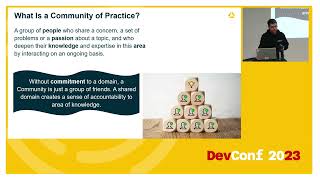 37mHow to Create Development Opportunities Through the Organizational Communities
 45mConnecting Community/DevRel Teams to Other Teams
 38mPolyglot Agile
 40mOne Success, One Failure and Many Lessons
 34mNative Agile Psychology of Teams and Individuals
 24mAgile working in a slow-moving world
 15mGrowing at Work with Community-oriented Development
 20mRevealing Mechanisms to Create Resilient Teams and the Organizational Culture That Supports Them