Provenance analysis against fake news

summary
The talk describes the FAPESP DéjàVu project, which uses machine learning and computer vision to organize and reconstruct events from text, images and video to retell stories from multiple perspectives. It focuses on provenance analysis — techniques to trace the origin and evolution of multimedia content — and how those methods can be applied to fight fake news.
AI-written summary · about
chapters (14)
- 0:00Project introduction
- 3:24Fake image impact
- 6:54Modern manipulation tools
- 9:34Deepfakes and video manipulation
- 11:46Digital forensics approach
- 13:08Video sync analysis
- 16:04Image phylogeny map
- 19:45Printer fingerprinting
- 21:11Image alteration detection
- 24:04Image composition techniques
- 26:39DARPA project
- 27:44License plate recognition
- 29:14Sensitive content detection
- 30:02Closing and next steps
related talks
 34mApplying Machine Learning Techniques to Detect and Understand Fake News
- 34mApplying Machine Learning Techniques to Detect and Understand Fake News
 26mDeepfakes, audiofakes, and the future of media
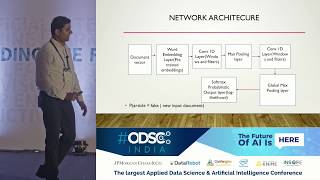 19mDetection & Classification of Fake news using Convolutional Neural Nets
 38mDetecting Propaganda in Fake News using Natural Language Processing
 38mDIY Deep Fakes
 27mTruth or Fiction The Art of Unveiling DeepFakes in Text, Audio, Image
 05mEvolving Landscape of Disinformation - Lessons Learned So Far!