A Brief History of Real Time Audio (or Wasn’t That API Deprecated?)
summary
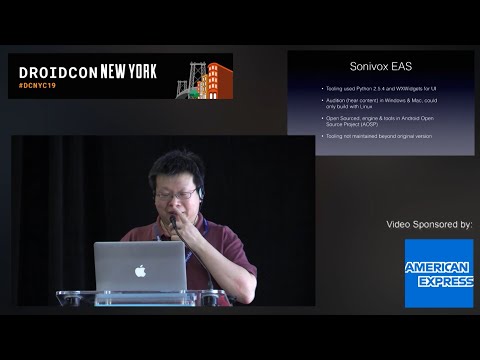
A concise timeline of Android real-time audio: early MIDI engine JetPlayer (Android 1.5), NDK-only OpenSL ES (API 9) giving ~45 ms latency, then a rearchitecture (2012–2014) and feature_audio_pro (API 23) that finally enables the low-latency path AAudio (Android 8) plus Oboe C++ wrapper with OpenSL fallback; community bug filed 2009 and tracked into 2017–18; target round-trip goal is <20 ms but true low latency remains limited to flagship devices and faces USB and Bluetooth challenges.
AI-written summary · about
chapters (9)
- 0:00Introduction to real-time audio
- 1:39Early Android audio APIs
- 4:30OpenSL ES introduction
- 6:58Real-time audio latency challenges
- 9:47Google's efforts to improve audio
- 11:11Audio latency testing tools
- 12:15AAudio and Project Oboe
- 13:59Modern MIDI and audio APIs
- 14:39Current limitations and challenges
related talks
 39mDemystifying Low Latency Audio on Android
 38mAndroid Audio: Beyond Winning On It
 20mLow latency Audio - because your ears are worth it
 40mHigh Performance Audio
 26mUnderstanding and Implementing Audio on Android
 16mUnderstanding and Implementing Audio on Android
 42mLet's make some noise with Android
 40mAccessible audio: Android hearing aid support and the audio framework